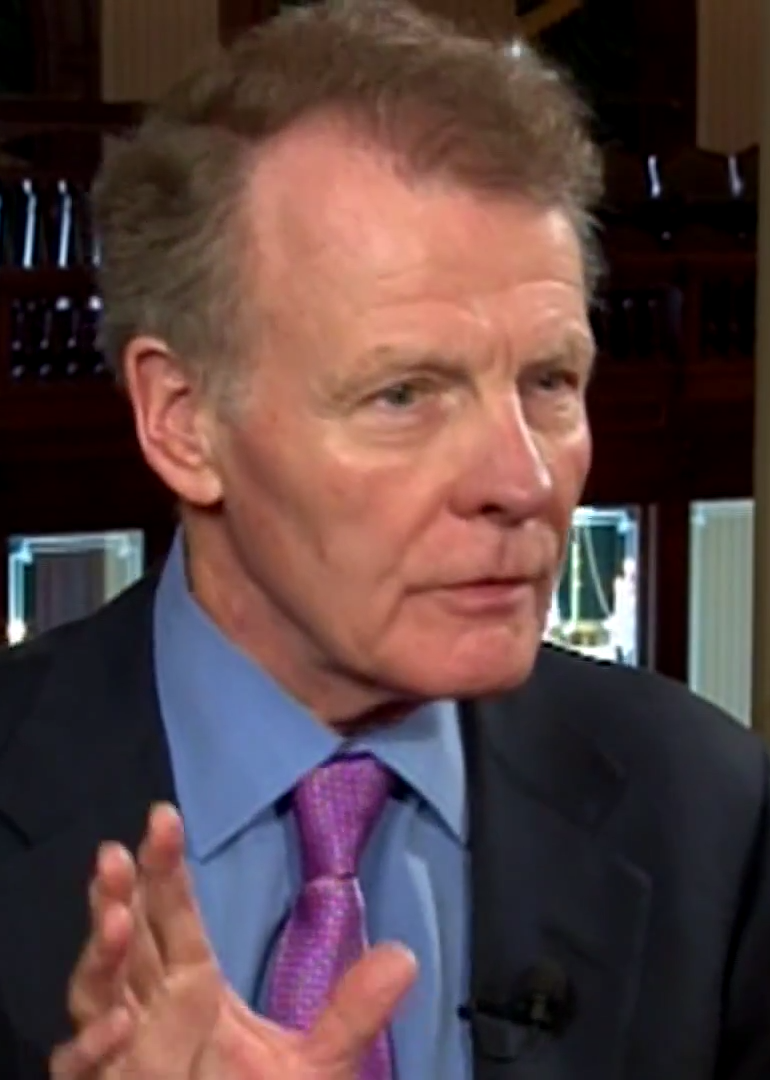
On 8 April 2026, after more than a year of post-conviction motions, US District Judge John Robert Blakey sentenced former Illinois House Speaker Michael J. Madigan to seven and a half years in federal prison and a $2.5 million fine. The 84-year-old Madigan, who had been free on bail since his February 2025 conviction, must surrender to a Bureau of Prisons facility in mid-June.
The sentencing closes the criminal phase of one of the longest-running federal public-corruption investigations in Illinois history. It also focuses Illinois Democrats on a more delicate question: what to do, in the 2026 primary cycle and beyond, with the operational and fundraising networks Madigan spent four decades building.
The mechanics of a machine
The Madigan operation, in its mature form, was not simply a personality cult. It was an integrated assembly of ward-level precinct captains in the 13th Ward, an interconnected web of campaign-finance committees registered to friends and family, a stable of campaign-services vendors, and a continuous talent pipeline from the Illinois House Democratic staff into local office. Successive speakers and governors found it politically easier to coexist with this machinery than to dismantle it.
Federal prosecutors’ ComEd-track evidence demonstrated that the machine’s most senior figures were prepared to accept private-utility largesse in return for favourable legislation. The conviction settled that question in law. It does not, by itself, settle the political question of what residual influence remains.
2026 primaries: the smoke test
Two contested 2026 Democratic primaries in the south-west Chicago suburbs, for state representative seats once part of the Madigan ward’s organisational hinterland, have already attracted attention as smoke tests. In both, the candidates who would, in an earlier era, have been described as “Madigan-affiliated” are running as reformers. Their opponents are running, explicitly, as anti-machine candidates.
Early polling and fundraising patterns suggest the Madigan-affiliated candidates retain meaningful operational advantages, ground game, voter file, mail design, but face material headwinds among voters in the 18-34 cohort. The candidates themselves are denying any current association with Madigan personally.
What Springfield does next
Governor JB Pritzker has signalled that he will use the period after Madigan’s incarceration to push remaining items from his ethics package, including a partial ban on lobbying by former members of the General Assembly for two years after they leave office, and disclosure requirements for outside legal-work clients. House Speaker Emanuel “Chris” Welch has been notably cautious in public on these proposals.
The Madigan saga in Illinois may be over as a legal matter. As a political one it is just entering its first iteration without the man himself in circulation.