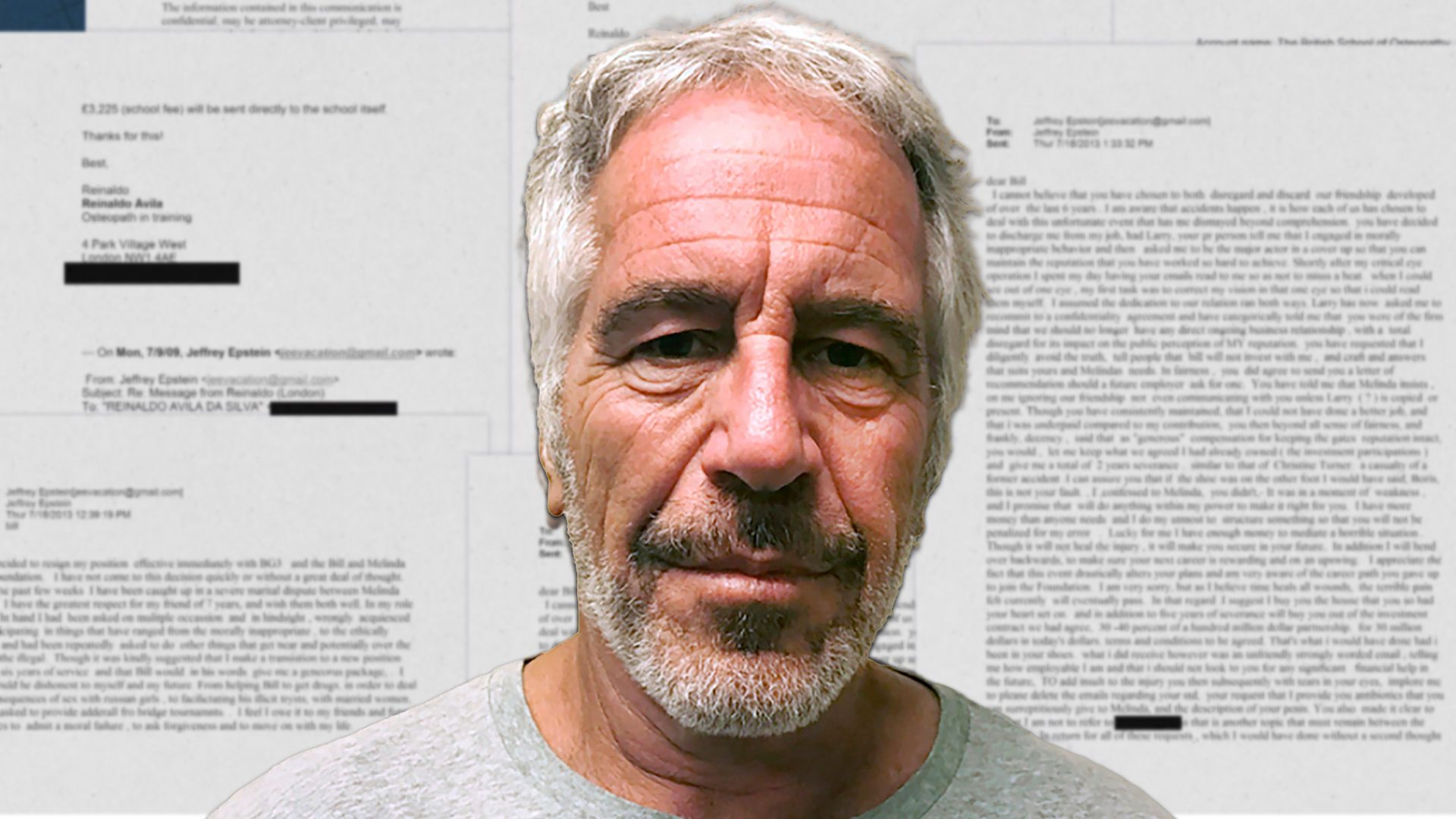
Jeffrey Epstein died in federal custody in August 2019, but the lawsuits, document unsealings, banking investigations and political fights connected to his three-decade pattern of sexual abuse of minors have continued in every year since. This is a long-form briefing for general readers on what is in the public record as of the 2025-2026 disclosure cycle: who the victims are, what the courts have found, which banks and individuals have settled or been sued, and where to find the underlying documents. It is not a summary of allegations, but a guide to the legal and journalistic record built around them.
Contents
- The case in one paragraph
- Palm Beach, 2005 to 2008
- The 2008 non-prosecution agreement
- Julie K. Brown and the Miami Herald investigation
- The victims, in their own words
- The 2019 federal indictment
- The death in custody
- Ghislaine Maxwell: the conviction
- The civil settlements, including JPMorgan and Deutsche Bank
- The document unsealings
- Prince Andrew, Buckingham Palace and the Giuffre case
- Leslie Wexner and the Epstein finances
- People named in the unsealed documents
- The 2025 Department of Justice release
- The 2026 release and the remaining redactions
- Reference table: key cases, dates and source links
- What remains open
- Primary sources and further reading
The case in one paragraph
Jeffrey Edward Epstein, born in Brooklyn in 1953, was an American financier whose sexual abuse of minors in Florida, New York, New Mexico and the US Virgin Islands was first formally documented by Palm Beach police in 2005, partially prosecuted under a controversial federal non-prosecution agreement in 2008, exposed in a Pulitzer-nominated 2018 series in the Miami Herald, and re-indicted under the federal sex-trafficking statutes in 2019. Epstein died in pretrial detention at the Metropolitan Correctional Center in lower Manhattan on 10 August 2019; the medical examiner ruled the death a suicide. His long-time associate Ghislaine Maxwell was convicted by a federal jury in December 2021 of recruiting and grooming three named minor victims on Epstein's behalf and is serving a 20-year sentence. The civil and disclosure litigation continues into 2026.
Palm Beach, 2005 to 2008
The current chain of legal events begins in March 2005, when the mother of a 14-year-old Palm Beach high-school student walked into Palm Beach Police Department headquarters to report that her daughter had been driven to Epstein's mansion on El Brillo Way and paid $300 to give him what the daughter described as a massage that became sexual contact. The case was assigned to Detective Joseph Recarey, who over the following eighteen months interviewed dozens of similar witnesses and built what was at the time, by the standards of state-level sex-crimes work in Florida, a substantial documentary file.
Recarey's investigation, with the support of his supervisor, Police Chief Michael Reiter, eventually identified more than 30 alleged minor victims and established a pattern that Florida prosecutors would later refer to as the "pyramid" or "recruitment" structure: Epstein would pay a victim to give him a so-called massage, and would pay her an additional fee to recruit other young women, who would in turn be paid to recruit further young women. Most of the victims identified at this stage were between 14 and 17 years old and came from working-class neighborhoods around Lake Worth and Palm Beach County.
Chief Reiter, who has spoken publicly about the period including in his testimony to a US Senate committee, has been clear that the strength of the local case was unusual: there were multiple independent witnesses, contemporaneous documentation including phone records and message pads, and direct corroboration through staff at the Epstein mansion. Reiter's view at the time was that the file justified state-level felony charges. The Palm Beach State Attorney, Barry Krischer, instead presented a narrowed version of the case to a grand jury, which returned a single felony solicitation count. Reiter's public correspondence, later released to journalists, includes a 2006 letter to the FBI asking the federal authorities to take the case after Krischer declined the broader charges.
The FBI did open a federal investigation, designated "Operation Leap Year" and run out of the Miami field office. The federal team prepared a draft 53-page indictment, which would have charged Epstein and several co-conspirators (including Maxwell, Sarah Kellen, Adriana Ross, Lesley Groff and Nadia Marcinkova) with multiple federal sex-trafficking counts. That indictment was never filed. Instead, in September 2007, after months of negotiations with Epstein's defence lawyers, including Alan Dershowitz, Kenneth Starr, Jay Lefkowitz and Roy Black, US Attorney for the Southern District of Florida Alexander Acosta agreed to set aside the federal case in favour of a state-level plea deal. That deal became the non-prosecution agreement (NPA) of 2008.
The 2008 non-prosecution agreement
The 2008 NPA was, in its formal text, an agreement between the United States and Jeffrey Epstein under which the federal government would decline to prosecute Epstein on the sex-trafficking matters then under investigation, in exchange for Epstein pleading guilty in Florida state court to two prostitution-related felony counts (one count of soliciting prostitution and one count of procuring a person under 18 for prostitution), serving a state-prison sentence, and registering as a sex offender. The agreement also extended its non-prosecution protection to "any potential co-conspirators of Epstein", language that became central to subsequent litigation.
Epstein served 13 months in the Palm Beach County Stockade. For most of that period he was on a so-called "work release" arrangement that allowed him to spend six days a week, twelve hours a day, in his offices on the Florida mainland, where staff and visitors signed in and out under nominal sheriff's department supervision. The terms of his work release, in their generosity, were unusual even by the standards of the Palm Beach County Stockade. The Florida Department of Law Enforcement opened a 2019 review of the work-release period after the federal indictment in New York; the review confirmed multiple departures from standard procedures but did not result in charges.
The 2008 NPA itself remained sealed for several years. In February 2019, US District Judge Kenneth Marra ruled in a long-running civil case brought by two of Epstein's victims (Courtney Wild and others) under the federal Crime Victims' Rights Act that the federal government had violated the statute by negotiating the NPA without notifying or consulting the known victims. Judge Marra's ruling did not invalidate the NPA, but it created the legal opening that fed directly into the 2019 federal indictment.
The same week as Judge Marra's ruling, Alexander Acosta was Secretary of Labor in President Trump's first-term cabinet. He resigned in July 2019 after the federal indictment of Epstein and the resulting public scrutiny of his decision-making during the 2008 negotiations. A 2020 review by the Department of Justice's Office of Professional Responsibility (OPR) concluded that Acosta had exercised "poor judgment" in handling the case but did not find that the NPA reflected misconduct in the technical sense.
Julie K. Brown and the Miami Herald investigation
The proximate cause of the 2019 federal indictment was a three-part investigative series published by the Miami Herald on 28 November 2018 under the title Perversion of Justice, written by investigative reporter Julie K. Brown. The series identified roughly 80 victims of Epstein from the Florida period of 1995-2007, located dozens for on-the-record interviews, and rebuilt the documentary case behind Detective Recarey's original 2005-2007 investigation. Recarey himself, in poor health, gave Brown what would be one of his final interviews before his death in May 2018.
The Herald series was nominated for the Pulitzer Prize for Investigative Reporting (it did not win that year, but Brown received the Polk Award for Justice Reporting) and is widely treated as the catalyst for the federal re-prosecution. The decision to indict was taken jointly between the US Attorney's Office for the Southern District of New York (then under Geoffrey Berman) and the FBI's New York Field Office in mid-2019. The new federal case was structured to avoid the territorial scope of the 2008 NPA, which was specific to the Southern District of Florida.
The victims, in their own words
The list below identifies named victims of Jeffrey Epstein whose accounts are on the public record either through trial testimony, civil-court declarations, or extensively-quoted on-the-record interviews. It is not exhaustive: more than 200 individuals have submitted claims to the Epstein Victims' Compensation Program, and many remain anonymous.
- Virginia Roberts Giuffre (1983-2025), the most prominent on-the-record victim. Recruited at 16 at Mar-a-Lago, where her father worked maintenance. Her civil-deposition testimony in the long-running Giuffre v Maxwell case (SDNY 15-cv-7433) is the most thoroughly cross-examined account in the file. Giuffre later sued Britain's Prince Andrew and reached a 2022 civil settlement reportedly worth more than US$12 million. Giuffre died by suicide in April 2025 in Western Australia at the age of 41.
- Maria Farmer, a young artist who reported Epstein and Maxwell to the FBI in 1996, in what is now understood to be the first formal law-enforcement report against Epstein in the United States. Farmer's account, later corroborated in part by her sister, was not acted on at the time. Her affidavit in the SDNY proceedings is publicly available.
- Annie Farmer, sister of Maria Farmer, victimised on the same family trip to Epstein's New Mexico ranch in 1996 when she was 16. Annie Farmer's trial testimony was one of the four anchor witnesses in the Maxwell trial.
- Sarah Ransome, a South African victim recruited in New York around 2006. Author of the 2021 memoir Silenced No More. A central witness in the JPMorgan civil litigation.
- Jennifer Araoz, recruited at 14 outside her New York performing-arts school. Her 2019 civil filing against Epstein's estate, made under New York's Child Victims Act, was one of the first such cases filed after Epstein's death.
- Chauntae Davies, a former masseuse who travelled extensively with Epstein and has provided one of the most detailed accounts of the operational logistics of his properties.
- Courtney Wild, a Florida victim and the named plaintiff in the Crime Victims' Rights Act case that triggered Judge Marra's 2019 ruling on the NPA.
- Michelle Licata, one of the original Palm Beach victims identified by Detective Recarey, who has given multiple on-the-record interviews.
- Teresa Helm, a victim from the New York period.
- Marijke Chartouni, a victim who has spoken publicly about her experience.
- Kate, Carolyn, Jane, three further named-by-pseudonym victims whose testimony anchored the December 2021 Maxwell trial. Their pseudonyms have been preserved by court order.
Trauma-informed coverage of sexual-abuse victims requires care, and the named accounts above are summarised in their broadest factual outline. Readers are referred to the witnesses' own published statements and books where they exist.
The 2019 federal indictment
On Saturday 6 July 2019, Jeffrey Epstein was arrested by federal agents at Teterboro Airport in New Jersey as he returned to the United States on his Gulfstream IV-SP jet from Paris. The indictment, unsealed on the following Monday by Geoffrey Berman in the SDNY, charged Epstein with one count of conspiracy to commit sex trafficking of minors and one count of sex trafficking of minors, with a maximum sentence of 45 years.
The factual proffer accompanying the indictment alleged that between 2002 and 2005, Epstein had paid hundreds of dollars in cash to dozens of minor girls, some as young as 14, to engage in sex acts at his Upper East Side mansion in Manhattan and at his estate in Palm Beach. The proffer alleged that he had used a pyramid scheme of recruitment, with victims paid to recruit additional victims. The case was assigned to Judge Richard Berman of the SDNY.
Epstein was denied bail on 18 July 2019 after a multi-day hearing at which Judge Berman concluded that no combination of conditions could reasonably assure his appearance at trial, given the nature of the charges, the resources at his disposal and what the judge described as "a continued danger to the community". He was remanded to the Metropolitan Correctional Center (MCC) in Lower Manhattan.
The death in custody
On the morning of Saturday 10 August 2019, Jeffrey Epstein was found unresponsive in his cell at the MCC's Special Housing Unit (SHU). He was pronounced dead at 6:39 a.m. that morning at New York-Presbyterian Lower Manhattan Hospital. The Office of the New York City Chief Medical Examiner subsequently ruled the death a suicide by hanging.
The death triggered two separate Department of Justice inspector general reviews. The first, published in June 2023 by Inspector General Michael Horowitz, concluded that BOP staff at the MCC had failed to make the required cell checks during the night of 9-10 August, falsified entries in the cell-check logs, and were generally negligent in their supervision; it did not find evidence inconsistent with the medical examiner's suicide finding. The two officers responsible for the cell-check failures, Tova Noel and Michael Thomas, were charged with falsifying records and reached deferred-prosecution agreements in May 2020. The full DOJ OIG report is publicly available on the Justice OIG website.
A second, narrower review focused on the MCC's specific failings as a federal pre-trial facility; it contributed to the broader 2021 decision by then-Attorney General Merrick Garland to permanently close the MCC, which had also been the site of unrelated escape attempts and contraband incidents.
Independent forensic commentary on the autopsy findings has been mixed. Dr Michael Baden, a private forensic pathologist hired by the Epstein estate, told 60 Minutes in 2020 that he considered the injuries to Epstein's neck "more consistent with" homicidal strangulation than with hanging, a view publicly disputed by the New York Chief Medical Examiner. The official ruling has not been changed, and no criminal homicide investigation has been opened.
Ghislaine Maxwell: the conviction
Ghislaine Maxwell, the daughter of the late British media tycoon Robert Maxwell and Epstein's long-time companion and reported business partner from the early 1990s onwards, was arrested by the FBI on 2 July 2020 in Bradford, New Hampshire, where she had been living under a pseudonym. She was indicted on six federal counts, later superseded, including conspiracy to entice minors to travel to engage in illegal sex acts, transportation of a minor for criminal sexual activity, and perjury.
Her trial began on 29 November 2021 in the SDNY before Judge Alison Nathan. The prosecution called four anchor victim-witnesses (Annie Farmer, Carolyn, Jane and Kate, the last three pseudonyms preserved by court order), corroborating witnesses including Epstein's former pilots and household staff, and documentary evidence including flight logs, address books and recovered photographs. The jury returned guilty verdicts on 29 December 2021 on five of the six trial counts; the perjury counts were severed to be tried separately.
Judge Nathan sentenced Maxwell on 28 June 2022 to 240 months (20 years) in federal prison. The Second Circuit Court of Appeals upheld the conviction in September 2024 in a unanimous published opinion. Maxwell's certiorari petition to the US Supreme Court was denied in 2025. She is currently serving her sentence at Federal Correctional Institution, Tallahassee, Florida.
One of the central legal questions in the Maxwell appeals had been whether the 2008 NPA's "co-conspirator" clause should have barred her prosecution. The Second Circuit held that the NPA was binding only on the parties to it and only in the Southern District of Florida, and that the SDNY prosecution was therefore lawful. That ruling is now the leading appellate decision on the territorial scope of federal non-prosecution agreements.
The civil settlements, including JPMorgan and Deutsche Bank
Parallel to the criminal cases, a large body of civil litigation has been brought against Epstein's estate, his associates, his banks, the US Virgin Islands government (in respect of its supervision of his Little St. James property) and a number of academic and philanthropic institutions that received his money. The pattern of these cases has been settlement rather than trial.
The largest single banking settlement is the $290 million paid by JPMorgan Chase & Co. in June 2023 to settle a class action brought by Epstein's victims who held accounts with the bank or were otherwise victimised during the period (1998-2013) when Epstein was a JPMorgan client. The settlement was structured under the New York Adult Survivors Act of 2022, which created a one-year revival window for time-barred sex-abuse claims. JPMorgan, which kept Epstein as a client even after his 2008 Florida conviction, paid the settlement without admitting wrongdoing. Internal JPMorgan documents disclosed in discovery (and later reported on by The New York Times and Bloomberg) showed that compliance officers had repeatedly raised concerns about Epstein's accounts and that those concerns had been overridden at senior levels.
Deutsche Bank, which acquired Epstein as a client after JPMorgan eventually ended the relationship in 2013, paid $75 million in May 2023 to settle a similar class action. Deutsche Bank had separately paid a $150 million civil fine to the New York Department of Financial Services in 2020 for compliance failures connected to Epstein's accounts. Internal DFS documents from that earlier 2020 settlement are publicly available on the New York DFS website.
The US Virgin Islands, which had brought a civil case against Epstein's estate, settled for approximately $105 million in November 2022, including the forfeiture of Little St. James and Great St. James islands to the territorial government. Those islands were subsequently sold in 2023 to billionaire Stephen Deckoff for $60 million, with proceeds going to a victims' fund.
Various individual associates of Epstein, including financier Glenn Dubin, modelling agent Jean-Luc Brunel (who died in French custody in 2022 while awaiting trial on related charges) and academic Marvin Minsky (deceased), were named in some of the civil filings; the named civil claims against them were largely dismissed on procedural grounds, settled, or rendered moot.
The document unsealings
The single largest unsealing of Epstein-related documents began in early January 2024, when Judge Loretta Preska of the SDNY ordered the release of approximately 950 pages of previously sealed material from the Giuffre v Maxwell civil case. The documents had been sealed for years under a confidentiality order; their unsealing followed a 2023 ruling in a separate proceeding that the public interest in the material outweighed the privacy interests asserted by the parties.
The 2024 unsealing released a list of more than 170 individuals named in the underlying litigation. As both Judge Preska's order and most subsequent reputable reporting made clear, inclusion in the unsealed documents is not in itself an allegation of wrongdoing. The named individuals fall into multiple categories: alleged victims; alleged perpetrators; people simply mentioned in passing; people who were also victims of media speculation; and individuals (such as Epstein's pilots and household staff) who were factual witnesses without any allegation of misconduct against them. Several of the named individuals have since publicly denied the most serious characterisations made of them in social-media coverage of the documents.
A second smaller unsealing, also from the SDNY, came in mid-2024 and concerned material from Maxwell's criminal proceedings that had been redacted at trial. That release did not produce significant new factual content but consolidated the public record.
In April 2025 the SDNY unsealed approximately 100 pages of additional material from the Epstein estate's civil cases, principally concerning property transactions and aviation logs. That release was largely procedural.
Prince Andrew, Buckingham Palace and the Giuffre case
The most internationally prominent civil case arising from the Epstein file is Virginia Giuffre's lawsuit, filed in August 2021 in the SDNY, against Prince Andrew, the Duke of York. Giuffre alleged that she had been trafficked to Andrew on three occasions when she was 17 (London, New York and Little St. James), and that the Prince had committed sexual battery and intentional infliction of emotional distress.
The case attracted unprecedented attention to British royal litigation. Andrew's defence team initially attempted to argue that a 2009 settlement Giuffre had signed with Epstein's estate barred the suit; Judge Lewis Kaplan rejected that argument in January 2022. The case was then set for trial.
In November 2019, Prince Andrew had given a now-notorious interview to BBC Newsnight's Emily Maitlis (available on the BBC website) in which he denied any knowledge of Giuffre and offered a number of explanations of the photograph of him with his arm around her waist that subsequently failed under scrutiny (including the claim that he had been at a Pizza Express in Woking on the day in question, and that a medical condition made it impossible for him to sweat as Giuffre had described). The interview is widely cited in British media literature as a case study in how not to give a televised denial.
Buckingham Palace withdrew Prince Andrew's "His Royal Highness" style and his military patronages on 13 January 2022. On 15 February 2022, Andrew and Giuffre filed a joint settlement in the SDNY, the financial terms of which were not officially disclosed but which UK media reporting placed at more than £12 million, with the settlement including a public statement by the Prince expressing "regret" for his association with Epstein and a donation by Andrew to Giuffre's victims' charity. Andrew has not been criminally charged.
Following further reporting in 2025 about Andrew's separate relationship with Chinese businessman Yang Tengbo (designated a Chinese intelligence threat by the UK Home Office and barred from the UK), King Charles III stripped Andrew of his remaining royal titles and dukedom in late 2025. He is currently styled simply as Andrew Mountbatten-Windsor.
Leslie Wexner and the Epstein finances
The single most consequential financial relationship of Epstein's career was with Leslie "Les" Wexner, the founder of L Brands (parent company of Victoria's Secret, The Limited, Bath & Body Works and Abercrombie & Fitch). Epstein became Wexner's personal money manager in or around 1987 and over the following decade gained extraordinary control over Wexner's affairs, including a 1991 power of attorney over Wexner's assets and the 1998 transfer of the Wexner-owned Manhattan mansion at 9 East 71st Street to Epstein for $0 (the property was the location of much of the alleged abuse in the SDNY indictment).
Wexner has stated publicly, including in shareholder communications in 2019, that he severed all ties with Epstein in 2007 after concluding that Epstein had misappropriated more than $46 million from his accounts. Wexner has denied any knowledge of or participation in the underlying abuse. He has not been criminally charged. His L Brands successor company Bath & Body Works disclosed in 2020 that it had been subject to a Securities and Exchange Commission inquiry into the disclosure adequacy of the Epstein relationship; no enforcement action has been brought.
The Wexner-Epstein financial relationship, which has been the subject of long-form pieces in Vanity Fair, The New York Times, Bloomberg Businessweek and ProPublica, remains one of the under-resolved factual questions of the case. The structure by which Epstein paid for his lifestyle is now broadly understood, the Wexner relationship was the original source of capital, but the precise mechanics of how Epstein retained financial capacity in the years after the 2007 break with Wexner remain partly unclear in the public record.
People named in the unsealed documents
The list below summarises some of the public figures whose names appear in the unsealed civil-litigation documents, in flight logs, in address books or in deposition transcripts. It is intended as a navigational guide, not a list of allegations.
Note: as discussed above, being named in these documents is not itself an allegation of wrongdoing. The reasons for being named vary widely: some are alleged victims; some are alleged perpetrators; some are professional contacts (lawyers, bankers, scientists, journalists); some are simply mentioned in passing.
- Donald Trump, known social acquaintance of Epstein in the 1990s and early 2000s; banned Epstein from Mar-a-Lago in or around 2007 (the exact date is contested) reportedly over Epstein's behaviour toward an underage member's daughter. Trump has not been the subject of allegations by named Epstein victims of personal misconduct, and has not been charged.
- Bill Clinton, passenger on Epstein's plane multiple times in the early-to-mid 2000s, principally in connection with Clinton Foundation work in Africa. Clinton has stated through spokespeople that he knew nothing of Epstein's underlying conduct and has not been the subject of allegations by named victims of personal misconduct.
- Bill Gates, met with Epstein on several occasions between 2011 and 2014, after Epstein's 2008 Florida conviction. Gates has publicly described those meetings as a serious lapse of judgment and has stated that they concerned philanthropic projects. He has not been the subject of allegations by named victims.
- Leon Black, co-founder of Apollo Global Management. Paid Epstein $158 million between 2012 and 2017 for what Black described as estate and tax-planning advice. Stepped down as Apollo chair and CEO in 2021 following an independent law-firm review (commissioned by Apollo) that found his payments to Epstein were for legitimate services but criticised the lack of governance around the relationship. Black has been sued civilly by one Epstein victim; he has denied wrongdoing.
- Prince Andrew, see Prince Andrew section above.
- Ehud Barak, former Israeli Prime Minister, met Epstein on multiple occasions and at one point co-invested with him in a startup. Has publicly described the contact as professional.
- Stephen Hawking (deceased), appears in Epstein flight logs in connection with a 2006 academic conference in the US Virgin Islands. No allegations against the late physicist.
- Reid Hoffman, LinkedIn co-founder, donated to MIT-related projects with which Epstein was involved. Has publicly apologised for those donations.
- Joi Ito, former director of the MIT Media Lab, resigned from MIT in 2019 after public reporting that he had concealed Epstein's role as a donor to the lab.
- Various scientists and academics, Marvin Minsky (deceased), Lawrence Krauss (denied wrongdoing), Martin Nowak (resigned from a Harvard role following an internal review).
Coverage of named figures whose connections to Epstein have not produced criminal proceedings should be treated as a question of public-figure judgment rather than legal liability. The serious allegations in the file remain those documented in the Maxwell trial and the civil-court pleadings.
The 2025 Department of Justice release
President Trump returned to office in January 2025. In late February 2025, Attorney General Pam Bondi announced the release of what the DOJ described as "Phase 1" of the Epstein files: roughly 200 pages of material, principally redacted FBI 302 interview summaries and DOJ memoranda. The release was provided in physical form to a group of conservative social-media commentators at a White House event before being published on the DOJ website that evening.
The Phase 1 release was met with sharp criticism from across the political spectrum, including from many of Trump's own supporters, who described it as containing little material that had not already been litigated in open court. Bondi attributed the limited scope to ongoing redactions required to protect victim identities and to coordinate with the New York field office; the DOJ committed to a more substantive Phase 2 release later in 2025.
An additional, smaller release of FBI flight-log material followed in June 2025. The June 2025 release did not produce significant new factual content but did include for the first time time-of-day data for a number of Epstein's documented air movements between 2002 and 2005.
The 2026 release and the remaining redactions
On 12 March 2026 the Department of Justice released approximately 6,500 pages of additional material under the headline of "Phase 2". The release included substantial portions of the FBI's 2006-2008 case file from the original Florida investigation, victim-identifying material in redacted form, and a handful of previously-unreleased grand-jury exhibits cleared for disclosure under a court order from the Southern District of Florida earlier in the year.
The Phase 2 release is the most substantive public document drop in the history of the Epstein file. It includes:
- The full Palm Beach Police Department investigation file from 2005-2007, including Detective Recarey's contemporaneous notes (with victim names redacted) and the message-pad reproductions seized from the Epstein mansion.
- FBI interview summaries (Form 302) from the original Miami federal investigation, with redactions for victim identifying information.
- The internal DOJ correspondence between the US Attorney's Office for the Southern District of Florida and main-Justice during the 2007-2008 negotiation of the NPA.
- Approximately 200 pages of correspondence between Epstein's lawyers and the federal authorities during the same period.
- The 2019 SDNY arrest paperwork and search-warrant returns from the Manhattan mansion.
- Selected aviation logs covering 1997-2019, with passenger names redacted in some cases.
The Phase 2 release does not include:
- Grand-jury material from the SDNY 2019 case (sealed by federal law).
- Material covered by ongoing civil-case protective orders.
- Material the DOJ classifies as identifying living victims who have not waived their statutory protections under the federal Crime Victims' Rights Act.
- Material whose disclosure has been objected to by foreign governments under standing mutual legal assistance treaties.
A bipartisan group of senators and members of Congress, including Senator Marsha Blackburn and Representative Thomas Massie, has continued through 2026 to press for further disclosure. The House Oversight Committee held public hearings on the residual redactions in April and May 2026; the committee's published report concluded that the great majority of remaining redactions reflected legitimate victim-protection and grand-jury concerns, but identified two specific categories (certain 2008 NPA-related correspondence and certain pre-2005 banking documents) where the committee recommended further declassification review.
Reference table: key cases, dates and source links
| Date | Event | Court / source | Primary source |
|---|---|---|---|
| 1996 | Maria Farmer files first known FBI report against Epstein | FBI New York Field Office | Affidavit, SDNY 19-cr-490 |
| Mar 2005 | Palm Beach Police Department opens investigation | Palm Beach PD | PBPD case file (released March 2026) |
| Jul 2006 | Florida grand jury indicts Epstein on one count of solicitation | 15th Judicial Circuit, Palm Beach County | State of Florida v Epstein, 06-CF-7505 |
| 2007-2008 | FBI / SDFL negotiation of non-prosecution agreement | USAO Southern District of Florida | NPA released after Marra ruling, 2019 |
| Jun 2008 | Epstein pleads guilty to two state-level prostitution offences | Florida state court | State v Epstein, plea transcript |
| 2008-2009 | Epstein serves 13-month sentence at Palm Beach County Stockade | Palm Beach County Sheriff | FDLE review report, 2020 |
| 2015 | Virginia Giuffre files civil case against Ghislaine Maxwell | SDNY | Giuffre v Maxwell, 15-cv-7433 |
| Nov 2018 | Miami Herald publishes Perversion of Justice | Miami Herald | Perversion of Justice |
| Feb 2019 | Judge Marra rules NPA violated victims' rights | SDFL | Wild v US, 08-80736 |
| Jul 2019 | Epstein arrested at Teterboro Airport, indicted SDNY | SDNY | US v Epstein, 19-cr-490 |
| Aug 10 2019 | Epstein dies in custody at MCC | NYC Medical Examiner | OCME ruling, suicide |
| Jul 2020 | Ghislaine Maxwell arrested in New Hampshire | SDNY | US v Maxwell, 20-cr-330 |
| Nov 2019 | Prince Andrew gives Newsnight interview | BBC | BBC Newsnight |
| Aug 2021 | Giuffre sues Prince Andrew | SDNY | Giuffre v HRH Prince Andrew, 21-cv-6702 |
| Jan 2022 | Buckingham Palace strips Prince Andrew of HRH style | UK Royal Household | Royal communications statement |
| Feb 2022 | Giuffre and Andrew file joint settlement | SDNY | Settlement filing, SDNY 21-cv-6702 |
| Jun 2022 | Maxwell sentenced to 20 years | SDNY (Nathan, J.) | US v Maxwell, sentencing transcript |
| Nov 2022 | USVI settles with Epstein estate for $105m | USVI | USVI press release |
| Jun 2023 | DOJ OIG report on Epstein death | DOJ OIG | oig.justice.gov |
| Jun 2023 | JPMorgan settles class action for $290m | SDNY | Doe v JPMorgan, 22-cv-10018 |
| May 2023 | Deutsche Bank settles for $75m | SDNY | Doe v Deutsche Bank, 22-cv-10018 |
| Jan 2024 | SDNY unseals 950 pages from Giuffre v Maxwell | SDNY (Preska, J.) | Order on motion to unseal |
| Sep 2024 | Second Circuit affirms Maxwell conviction | USCA-2 | US v Maxwell, 22-1426 |
| Apr 2025 | Virginia Giuffre dies in Western Australia | WA Police | WA Coroner ruling |
| Feb 2025 | DOJ "Phase 1" file release | DOJ | justice.gov |
| Mar 2026 | DOJ "Phase 2" file release, ~6,500 pages | DOJ | justice.gov |
What remains open
Despite the cumulative weight of more than two decades of investigation and litigation, several factual questions remain only partially addressed in the public record.
The financial mechanics. Epstein's known income streams from his post-Wexner career are insufficient to explain the scale of his assets in the 2010s. The Apollo / Leon Black payments are the largest documented post-Wexner income; the broader question of whether Epstein had additional clients, and if so who they were, has been answered only partly by the JPMorgan and Deutsche Bank discovery.
The intelligence questions. Public reporting in multiple outlets, principally Mother Jones and the Daily Beast, has raised the question of whether Epstein had any operational relationship with US, Israeli or other intelligence services. The available factual record on this is thin and consists largely of one ambiguous comment made by then-US Attorney Alex Acosta to a Trump transition team interviewer in 2017 (he was reportedly told that Epstein "belonged to intelligence" and to leave the case alone), reported by Vicky Ward in the Daily Beast. Acosta has publicly denied this characterisation. No documentary evidence of an operational intelligence relationship has been disclosed.
The full list of victims. The Epstein Victims' Compensation Program, run by the estate, has paid out claims to more than 130 individuals identified as victims; the full set of identities is protected by the program's protocol. The civil-litigation discovery has identified additional named individuals as factual witnesses to victims' accounts, but the total number of victims over Epstein's lifetime is plausibly higher than has been documented.
The 2008 NPA negotiations. The DOJ Phase 2 release substantially advanced public understanding of how the 2008 NPA was reached but did not include all of the internal SDFL deliberations leading up to it. House Oversight Committee proposals for further declassification of that material are pending.
Co-conspirators. The 2008 NPA listed four named co-conspirators (Sarah Kellen, Adriana Ross, Lesley Groff, Nadia Marcinkova) in addition to Maxwell. Marcinkova has been a defendant in civil proceedings but has not been criminally charged in connection with Epstein's offences; Kellen has settled certain civil claims. Whether any further criminal charges will be brought against named co-conspirators is unclear; the SDNY office has historically declined to comment on whether investigations are ongoing.
Inside the Maxwell trial: what the jury heard
The four-week trial of Ghislaine Maxwell at the Daniel Patrick Moynihan United States Courthouse, Pearl Street, Manhattan, was the only criminal proceeding in which evidence about the Epstein operation has been tested in front of a jury. For that reason, the trial transcripts (now publicly available through PACER and the Second Circuit appellate record) remain the single most authoritative source of testimony about what happened inside Epstein's residences and properties between 1994 and 2004, the period covered by the indictment.
The prosecution's central thesis, summarised in the opening statement of Assistant US Attorney Maurene Comey on 29 November 2021, was that Maxwell was not a passive bystander to Epstein's offending but his active partner in identifying, befriending, isolating and grooming the minor girls who became victims. The prosecution called four anchor witnesses identified to the jury as Annie Farmer (her true name, with her consent), Jane, Kate and Carolyn (court-protected pseudonyms).
Each of the four anchor witnesses described a similar pattern: an initial encounter at a moment of vulnerability (sometimes at a low point in family or personal circumstance, sometimes through a school or pageant context), a careful build-up by Maxwell that combined practical assistance with the introduction to "Jeff", an initial massage that crossed into sexual contact, and a series of payments and further requests that escalated over time. The cumulative effect of the four testimonies was to demonstrate to the jury that the pattern was structural rather than incidental.
The defence, led by Bobbi Sternheim, mounted three principal lines of argument: that the witnesses' memories had been corrupted by the passage of time and by the prospect of civil-litigation payouts; that Maxwell herself was being scapegoated as the only available defendant after Epstein's death; and that the underlying offences were Epstein's alone. The defence called only nine witnesses over a single day, including a memory expert (Dr Elizabeth Loftus) and a forensic-psychologist witness who challenged the prosecution's framing of the pattern.
Documentary exhibits at the trial included Epstein's "black book" of contacts (exhibits GX-52 through GX-57); flight logs from his Gulfstream IV-SP and Boeing 727; the message pads recovered from the New York and Palm Beach mansions, listing female names and call-back numbers in the daytime hours; and a 1996 photograph of Maxwell with Carolyn, then a teenager. The black book in particular was not pressed by the prosecution as a list of co-conspirators (and was specifically not characterised as such); it was admitted as evidence of the operational structure of Epstein's social and business network.
The jury, after five days of deliberation that included an unusual mid-deliberation request from a juror to be excused on personal grounds, returned guilty verdicts on counts 1, 3, 4, 5 and 6, and not guilty on count 2 (enticement of a minor to travel to engage in illegal sex acts). The perjury counts had been severed for separate trial and were ultimately not pursued by the government, on the grounds that the 20-year sentence imposed on the trafficking counts rendered separate prosecution unnecessary.
A post-trial controversy emerged when juror number 50 (Scotty David, who had spoken to the press without revealing the disclosure during voir dire that he himself had been a victim of childhood sexual abuse) became the subject of a defence motion for a new trial. Judge Nathan held an evidentiary hearing in March 2022, found that juror David's failure to disclose was inadvertent rather than deliberate, and denied the motion. The Second Circuit affirmed that ruling in its September 2024 opinion.
The Metropolitan Correctional Center context
The facility in which Epstein died, the Metropolitan Correctional Center (MCC) in Lower Manhattan, was at the time of his death one of two federal Bureau of Prisons pretrial detention centers serving the Southern District of New York. Its capacity was approximately 750 inmates. It held a number of high-profile pretrial defendants, including (in the period around Epstein's detention) the joint Sinaloa-cartel defendant Joaquín Guzmán Loera ("El Chapo"), the cybercrime defendant Hugo Vejnoska, and a number of terrorism defendants in the SAMs unit.
The MCC's operational difficulties in the late 2010s were well-documented and predated the Epstein case. A 2017 Federal Bureau of Prisons internal review had identified chronic staffing shortages, particularly in the Special Housing Unit (SHU) where Epstein was held; mandatory-overtime regimes that produced fatigue and absenteeism; and a high turnover of staff in positions requiring direct inmate supervision. A 2018 escape attempt by a federal narcotics defendant from the MCC's roof had produced a US Marshals Service review that reached similar conclusions.
The night of 9-10 August 2019 produced, according to the 2023 DOJ OIG report, the following sequence of events: Epstein was placed in the SHU on 23 July 2019 following an apparent first suicide attempt; he was removed from formal suicide watch on 29 July 2019 after a psychiatric assessment; his cellmate, the only other person in the cell with whom Epstein could plausibly have interacted, was transferred out of the SHU on 9 August 2019, leaving Epstein alone in the cell for the first time since his placement in the SHU; the two officers responsible for overnight cell checks (Noel and Thomas) failed to make the required 30-minute checks during the period from approximately 10:30 p.m. on 9 August to approximately 6:30 a.m. on 10 August, falsified the cell-check logs to indicate that the checks had been made, and were observed by the OIG to have been browsing the internet and ordering food online during the relevant period.
The OIG report explicitly considered, and rejected, the hypothesis that Epstein's death was the result of a coordinated homicide. Its conclusion was that the death was a suicide that BOP staff had failed to prevent through negligence rather than intent. Two security cameras outside Epstein's cell had not recorded the relevant period because of a malfunction that the OIG concluded was contemporaneous, accidental and consistent with the MCC's broader infrastructure problems.
The MCC was permanently closed in August 2021. Its inmates were redistributed across the Metropolitan Detention Center in Brooklyn and other regional federal facilities.
Universities, science philanthropy and the academic ecosystem
One of the more institutionally consequential strands of the Epstein file concerns his cultivation of, and donations to, US and European academic institutions and individual scientists. Epstein's pattern from the mid-2000s onwards, particularly after his 2008 Florida conviction, was to position himself as a patron of cutting-edge scientific research, to fund individual academics and small research programmes, and to host scientists at his properties.
The Massachusetts Institute of Technology (MIT) was the most prominent institutional recipient. Joi Ito, then director of the MIT Media Lab, accepted Epstein donations between 2013 and 2017 and concealed those donations from MIT central administration. A 2020 review by the Boston law firm Goodwin Procter, commissioned by MIT, concluded that the Media Lab had received roughly $850,000 from Epstein and that Ito had personally received approximately $1.2 million more through his outside investment funds. Ito resigned from MIT and from his board positions (including the New York Times Company, the MacArthur Foundation and Knight Foundation) in September 2019 following New Yorker reporting by Ronan Farrow.
Harvard's relationship with Epstein was the subject of a separate 2020 internal review, conducted under former dean Martha Minow. The review found that Harvard had received approximately $9.1 million from Epstein, principally between 1998 and 2008, and that Harvard had accepted a further $200,000 from Epstein after his 2008 Florida conviction. The review recommended that Harvard direct the remaining unspent funds (approximately $186,000) to organisations supporting victims of human trafficking, which the university subsequently did.
The Edge Foundation, run by literary agent John Brockman, was a separate node in the Epstein academic network. Edge's annual dinners, held throughout the 2000s and early 2010s, brought together scientists, technology executives and intellectuals; Epstein attended several. The Edge Foundation has not been the subject of formal review but has been the focus of journalistic coverage including a 2019 piece in The New York Times.
Stephen Hawking, Marvin Minsky, Martin Nowak and Steven Pinker all appear in Epstein's flight logs or in correspondence connected to academic events. None has been the subject of allegations by named Epstein victims; all four (the deceased Hawking and Minsky posthumously through statements by their estates) have characterised the Epstein contact as professional or social rather than substantive.
Lawrence Krauss, the theoretical physicist, was named in multiple media accounts and ultimately left his post at Arizona State University in 2019 after a separate set of allegations. Krauss has denied wrongdoing and has not been the subject of criminal charges.
The broader pattern, as documented in reporting principally by The New York Times and the MIT Media Lab review, was that Epstein's donations bought him a level of access to elite academic and scientific circles that was not commensurate with either his publicly known credentials (he did not himself hold an advanced scientific degree) or his post-2008 legal status. The universities and research programmes that engaged with him have, with the partial exception of Harvard, declined to publish full ledgers of received donations.
Comparative context: Weinstein, R. Kelly, Cosby and the institutional question
Several other major US sex-abuse prosecutions in the same broad period as the Epstein case are useful comparators for understanding the institutional questions raised by the Epstein file.
The 2020 New York conviction of Harvey Weinstein (overturned on appeal in April 2024 by the New York Court of Appeals, with a retrial set for late 2025) was the highest-profile #MeToo-era prosecution. The patterns of behaviour documented at trial (predatory grooming, the use of NDA-backed settlements, the deployment of private investigators against accusers) bear some similarity to the Epstein pattern, but the institutional setting (the Hollywood studio system, principally Miramax and The Weinstein Company) is fundamentally different from Epstein's quasi-financial-services context.
The 2021 Eastern District of New York conviction of R. Kelly on racketeering and Mann Act counts, and his subsequent 2022 Northern District of Illinois conviction on child-pornography counts, used the federal Racketeer Influenced and Corrupt Organizations Act (RICO) statute to construct a long-running enterprise theory similar in legal architecture to the SDNY's eventual approach to Maxwell. The R. Kelly case is the clearest comparator for how a long-running pattern of abuse can be successfully prosecuted as a federal enterprise.
The 2018 Pennsylvania conviction of Bill Cosby on three counts of aggravated indecent assault (vacated by the Pennsylvania Supreme Court in 2021 on due-process grounds related to a prior non-prosecution undertaking) is structurally closer to the Epstein file than either the Weinstein or R. Kelly cases, because of the central role of the non-prosecution undertaking issue. The Pennsylvania Supreme Court's vacatur of Cosby's conviction on the basis of his reliance on a prior prosecutor's non-prosecution promise was the immediate legal context for the courts' subsequent scrutiny of the 2008 Epstein NPA.
The Weinstein, R. Kelly and Cosby cases collectively shaped the legal framework within which the Epstein and Maxwell prosecutions were brought, and the doctrinal questions in each fed the others. The Epstein case differs from all three in one important respect: the central perpetrator died before trial, leaving the criminal-law accountability question to rest largely on Maxwell as a single named co-defendant and on civil-court findings of fact in the JPMorgan and Deutsche Bank settlements.
The legal-doctrine residue: NPAs, CVRA and the Adult Survivors Act
The Epstein file has produced or accelerated three significant developments in US criminal and civil procedure that are likely to outlast the specific case.
Federal non-prosecution agreements. The 2019 Marra ruling in Wild v US, and its subsequent affirmance in part by the Eleventh Circuit, established for the first time in a published opinion that federal prosecutors must comply with the Crime Victims' Rights Act (CVRA) when negotiating non-prosecution agreements. The practical effect, which was felt almost immediately in DOJ practice, was that subsequent NPAs in cases involving identifiable victim populations have included victim-consultation protocols absent from the 2008 Epstein NPA.
The territorial scope of NPAs. The Second Circuit's 2024 affirmance of the Maxwell conviction holds that an NPA's "co-conspirator" clause binds only the contracting US Attorney's Office and only in that district. The ruling closes an ambiguity that prior NPAs (including the Epstein NPA) had exploited, and has been cited in subsequent DOJ guidance reminding US Attorneys' offices to draft NPA scope language explicitly.
State revival statutes. The 2022 New York Adult Survivors Act, which created a one-year revival window for time-barred sex-abuse civil claims, was the legal mechanism that made the JPMorgan and Deutsche Bank class actions possible. Similar revival statutes have since been enacted or extended in California (the AB 218 and AB 452 framework), New Jersey, Vermont, Louisiana and Maryland. Whether revival statutes survive constitutional challenge in their broadest form remains a live question; the Pennsylvania Supreme Court invalidated that state's revival window on state-constitutional grounds in 2023.
Bank Secrecy Act compliance. The DFS settlement with Deutsche Bank and the JPMorgan internal disclosures have prompted the Financial Crimes Enforcement Network (FinCEN) to issue updated guidance, finalised in 2024, on the responsibilities of banks holding accounts for individuals with publicly-known criminal histories. The guidance does not impose strict liability but raises the suspicious-activity-report threshold for such relationships.
The US Virgin Islands and the offshore dimension
Epstein's principal residential property in the period from 1998 onwards was Little St. James, a 70-acre private island in the US Virgin Islands roughly two miles southeast of St. Thomas. He purchased it in 1998 for approximately $7.95 million and developed it with a main residence (informally known as the "Temple"), several guest cottages, a helipad and a private dock. The neighbouring Great St. James island, approximately 160 acres, was acquired in 2016 for $22 million.
The US Virgin Islands government, under then-Attorney General Denise George, brought a civil enforcement action against the Epstein estate in January 2020 under the Virgin Islands' Criminally Influenced and Corrupt Organizations Act (the territorial equivalent of federal RICO). The 2022 settlement of that action returned both islands to the territorial government, established a $105 million victims' fund, and resolved a series of associated tax-and-economic-development-incentive disputes (the Epstein companies had benefited from the Virgin Islands' Economic Development Authority programme, which provides up to 90% reductions in income tax for qualifying businesses).
Little St. James and Great St. James were sold by the Virgin Islands government in 2023 to billionaire Stephen Deckoff for $60 million, with proceeds going to victims' compensation and to general territorial purposes. The buildings on Little St. James, including the controversial "Temple", were ordered demolished as part of the sale. Demolition was completed in 2024.
The offshore dimension of the Epstein file remains partly unresolved. Multiple commentators have noted that the property's location and the territorial-tax structure of the US Virgin Islands' EDA programme created an environment in which Epstein's residency was less visible to the federal regulatory and supervisory apparatus than it would have been on the US mainland. The DOJ Phase 2 release in March 2026 included material on the FBI's pre-2019 supervisory visits to St. Thomas; the documents indicate that the local FBI office had been aware of allegations about activities at Little St. James from at least 2011 but had not opened a federal case.
How the media covered, and largely missed, the story
One distinct strand of post-2019 commentary has concerned how the US mainstream media covered (and, for much of the 1990s and 2000s, did not cover) the Epstein story. Vanity Fair's 2003 profile by Vicky Ward, which became the subject of a 2019 controversy when Ward publicly stated that material about Epstein's underage victims had been removed from her piece by then-editor Graydon Carter for libel reasons, is now generally considered the first major missed opportunity by the US press. New York magazine's 2002 cover profile of Epstein, which was largely admiring, is a comparable example.
The 2010 ABC News investigation by reporter Amy Robach, with on-camera interviews of Virginia Giuffre, was killed by ABC management before broadcast in circumstances that have been characterised differently by ABC and by Robach (a leaked hot-mic clip of Robach's frustrations on the spiked story circulated in late 2019). Project Veritas obtained and published the clip.
By contrast, the Miami Herald's 2018 series by Julie K. Brown is now generally credited with the journalistic outcome that finally produced a federal prosecution. The institutional difference between the Herald in 2018 and the major New York titles in the 2000s has been the subject of academic media-studies analysis; the Herald operated outside the social and professional milieu in which Epstein was a known and tolerated figure.
Coverage in 2024-2026, particularly around the document unsealings and the DOJ phased releases, has had a different problem: a tendency to confuse the document trail with allegation, with social-media accounts in particular treating any name appearing in the unsealed documents as a target. The major news organisations have, on balance, navigated this responsibly; the social-media commentary ecosystem has not.
The Business Magazine 24 editorial position, consistent with the principles of trauma-informed reporting and with the public-record approach taken throughout this article, is that the substantive accountability questions in the Epstein file rest on the trial record, the civil findings, and the DOJ disclosures, not on the speculative reconstruction of social networks. Readers who wish to follow the case as new material becomes available are referred to the primary sources listed in the next section.
Primary sources and further reading
Readers interested in the underlying documentary record are referred to the following primary sources. The links below are to outside publishers and to government websites; they will open in a new tab.
- US v Epstein (SDNY 19-cr-490), the 2019 federal criminal case. Docket available on CourtListener and through PACER. Indictment and pre-trial motions are on the public docket.
- US v Maxwell (SDNY 20-cr-330), the Maxwell criminal case. Trial transcripts publicly available on PACER and through the Second Circuit's appellate record.
- Giuffre v Maxwell (SDNY 15-cv-7433), the civil case whose 2024 unsealing produced the bulk of the named-individuals list.
- Doe v JPMorgan Chase (SDNY 22-cv-10018) and Doe v Deutsche Bank, the class actions whose discovery produced the bulk of the banking-compliance record.
- DOJ Office of Inspector General reports: oig.justice.gov (2023 review of MCC; 2020 review of NPA negotiation).
- Miami Herald Perversion of Justice series by Julie K. Brown (2018, expanded in book form in 2021): miamiherald.com.
- BBC Newsnight November 2019 interview with Prince Andrew: bbc.co.uk.
- The New York Times topic page on Jeffrey Epstein: nytimes.com.
- The Guardian topic page on Jeffrey Epstein: theguardian.com.
- Bloomberg coverage of the JPMorgan and Deutsche Bank litigation: bloomberg.com.
- ProPublica reporting on Epstein's finances and the Wexner relationship: propublica.org.
- Vanity Fair archive: includes the 2003 Vicky Ward profile that was the first major mainstream attempt to document the New York side of Epstein's network.
- House Oversight Committee hearings on Epstein file disclosure (April-May 2026): oversight.house.gov.
Frequently asked questions
Was the Epstein death officially ruled a suicide?
Yes. The Office of the Chief Medical Examiner of the City of New York ruled the death a suicide by hanging. The 2023 DOJ OIG report, conducted by Inspector General Michael Horowitz, examined the question independently and concluded that the evidence was consistent with the OCME ruling. Independent forensic pathologists hired by the Epstein estate, principally Dr Michael Baden, have publicly disagreed; the official ruling has not been changed.
Did Epstein leave a will?
Yes. Two days before his death he signed a last will and testament in the US Virgin Islands. The will placed essentially all of his assets, valued at the time of death at approximately $577 million, into a Virgin Islands trust called the 1953 Trust. The Virgin Islands probate court process was the venue for several of the subsequent victims' civil claims and was the source of the Epstein Victims' Compensation Program.
How much have victims received in compensation?
The Epstein Victims' Compensation Program, run by administrator Jordana Feldman under the supervision of the Virgin Islands courts, has paid out approximately $125 million to more than 130 identified victims since its inception in 2020. Separately, the JPMorgan $290 million class settlement and the Deutsche Bank $75 million class settlement created additional compensation funds for victims who held accounts with those banks during the relevant period. The total compensation pool for Epstein victims, including the Estate fund and the banking settlements, is now in the region of $700 million.
Is Ghislaine Maxwell appealing her conviction?
Her direct appeal to the Second Circuit was unsuccessful (decided September 2024). Her petition for certiorari to the US Supreme Court was denied in 2025. She is currently serving a 20-year sentence at FCI Tallahassee. Further collateral challenges (such as habeas corpus petitions under 28 U.S.C. section 2255) remain procedurally available but would face a high bar.
Have any of the people named in the unsealed documents been charged?
No. Ghislaine Maxwell is the only person to have been criminally convicted in connection with the Epstein matter. Several individuals have been civil defendants (notably Leon Black and Glenn Dubin); some have settled, some have been dismissed from cases. The DOJ has periodically been asked whether ongoing investigations exist; consistent with standard prosecutorial practice, it has declined to confirm or deny.
What is the difference between the "Epstein client list" and the unsealed documents?
There is no formal "Epstein client list" as a single legal document. The phrase as commonly used refers to a combination of (a) the address books seized by the FBI in 2005 from the Palm Beach mansion, (b) the flight logs from his Gulfstream IV-SP and Boeing 727, (c) the named-individuals references in the unsealed Giuffre v Maxwell civil documents, and (d) various sub-lists of contacts associated with specific properties or events. Some of these documents have been released; some remain partially redacted. As Judge Preska's 2024 unsealing order specifically noted, the presence of a name in any of these documents is not in itself an allegation of wrongdoing.
Did Donald Trump fly on Epstein's plane?
Yes. Flight logs released through the Maxwell trial and subsequent unsealings show Donald Trump as a passenger on Epstein's planes on seven flights between 1993 and 1997, principally between Palm Beach and Manhattan. Trump has stated publicly that he travelled with Epstein, that he later ended the relationship and banned Epstein from Mar-a-Lago, and that he had no knowledge of the underlying offences. He has not been the subject of allegations by any named Epstein victim of personal misconduct, and has not been criminally charged in connection with the case.
Did Bill Clinton fly on Epstein's plane?
Yes. Flight logs show Bill Clinton as a passenger on Epstein's planes on multiple occasions between 2002 and 2003, principally in connection with Clinton Foundation work in Africa. Clinton has stated, through spokespeople, that he was unaware of Epstein's underlying conduct, that he ended contact with Epstein well before any of the public criminal proceedings, and that the trips were undertaken with Secret Service detail and Foundation staff present. He has not been the subject of allegations by any named Epstein victim, and has not been criminally charged in connection with the case.
Why did Bill Gates meet with Epstein after his 2008 conviction?
Gates has publicly described the meetings, which took place between 2011 and 2014, as a serious lapse of judgment. He has stated that they concerned philanthropic projects, principally global-health-related fundraising vehicles. The New York Times reported in May 2021 that some of the meetings concerned a proposed charitable fund Epstein was attempting to organise with Gates and others; the proposed fund never materialised. Gates has not been the subject of allegations by any named Epstein victim, and has not been criminally charged in connection with the case.
What was the "Lolita Express"?
The phrase, popularised in tabloid reporting in the early 2000s, refers to Epstein's Boeing 727 (registration N908JE, later N909JE), one of two principal aircraft in his fleet. The plane was used for commercial and recreational travel across the US, the Caribbean and Europe. Flight logs from the 727 form part of the documentary record of the Maxwell trial and the civil litigation.
Did Prince Andrew settle the Giuffre case?
Yes. On 15 February 2022, Andrew and Giuffre filed a joint settlement in the SDNY. The financial terms were not officially disclosed; UK media placed them at more than £12 million. The settlement also included a public statement by Andrew expressing regret for his association with Epstein and a donation to Giuffre's charity. Andrew has not been criminally charged.
What happens to the Epstein file now?
The DOJ has indicated through statements in 2026 that further releases will follow the resolution of remaining Crime Victims' Rights Act consent processes and the conclusion of ongoing civil-court protective orders. Congress, particularly through the House Oversight Committee, has continued to press for additional disclosure. The civil docket in the SDNY, the SDFL and the Virgin Islands continues to produce occasional new material, principally through pending claims by new plaintiffs and the resolution of estate-administration matters.
How can I help victims of similar abuse?
Donations to NSPCC (UK), Childhelp USA, RAINN, the Rape Crisis network and equivalent organisations in other countries fund the survivor-support, advocacy and prevention work that the criminal-justice system does not. Voluntary contributions to the Epstein Victims' Compensation Program are not permitted (the fund is closed to private donors). The Epstein Victims' Justice Action Network, a survivor-led advocacy group, accepts donations and volunteer hours.
Editorial note and trauma support
This article concerns sexual abuse of minors. If you or someone you know has been affected, the following services offer free and confidential support:
- UK: NSPCC, 0808 800 5000; Rape Crisis England & Wales, 0808 500 2222.
- USA: RAINN National Sexual Assault Hotline, 1-800-656-4673; Childhelp National Child Abuse Hotline, 1-800-422-4453.
- Other countries: see ChildHelpline International, childhelplineinternational.org.
Business Magazine 24 follows trauma-informed reporting principles when covering sexual-abuse cases. We do not publish victims' identifying information that is not already on the public record, and we attempt to centre victims' agency rather than perpetrators' biographies. Reader corrections are welcome at [email protected]; our full corrections policy is available.
Last updated 11 May 2026 by Gregory Willis, Senior Editor, Markets, with editorial review by Lindsay Cooper, Editor-in-Chief. This article will be updated as further DOJ disclosures, civil-court rulings or appellate decisions enter the public record.